Sapphire Belt. Master Double Touches.
Learn to read the backboard, preserve aerial momentum and convert the first touch into a controlled second contact.
The Sapphire Belt is the fifth Air Belt. After learning to carry the ball through the air, this lesson teaches you to stay connected to the play and finish the rebound before the defence can recover.
The First Touch Creates The Second.
A double touch begins before the ball reaches the backboard. The first contact must create a readable rebound while leaving your car on a path that can reach the next touch.
This is not about style points. It is about capitalising on rebounds.
Create A Readable Rebound
Control the pace and angle of the first touch so the backboard return remains predictable enough to follow.
Preserve The Flight Path
Continue through the first contact with enough control and momentum to reach the rebound instead of stopping to watch the shot.
Finish Before Recovery
Read the return early and meet it before the defender can reset their position or challenge the second touch.
Start The Sapphire Belt.
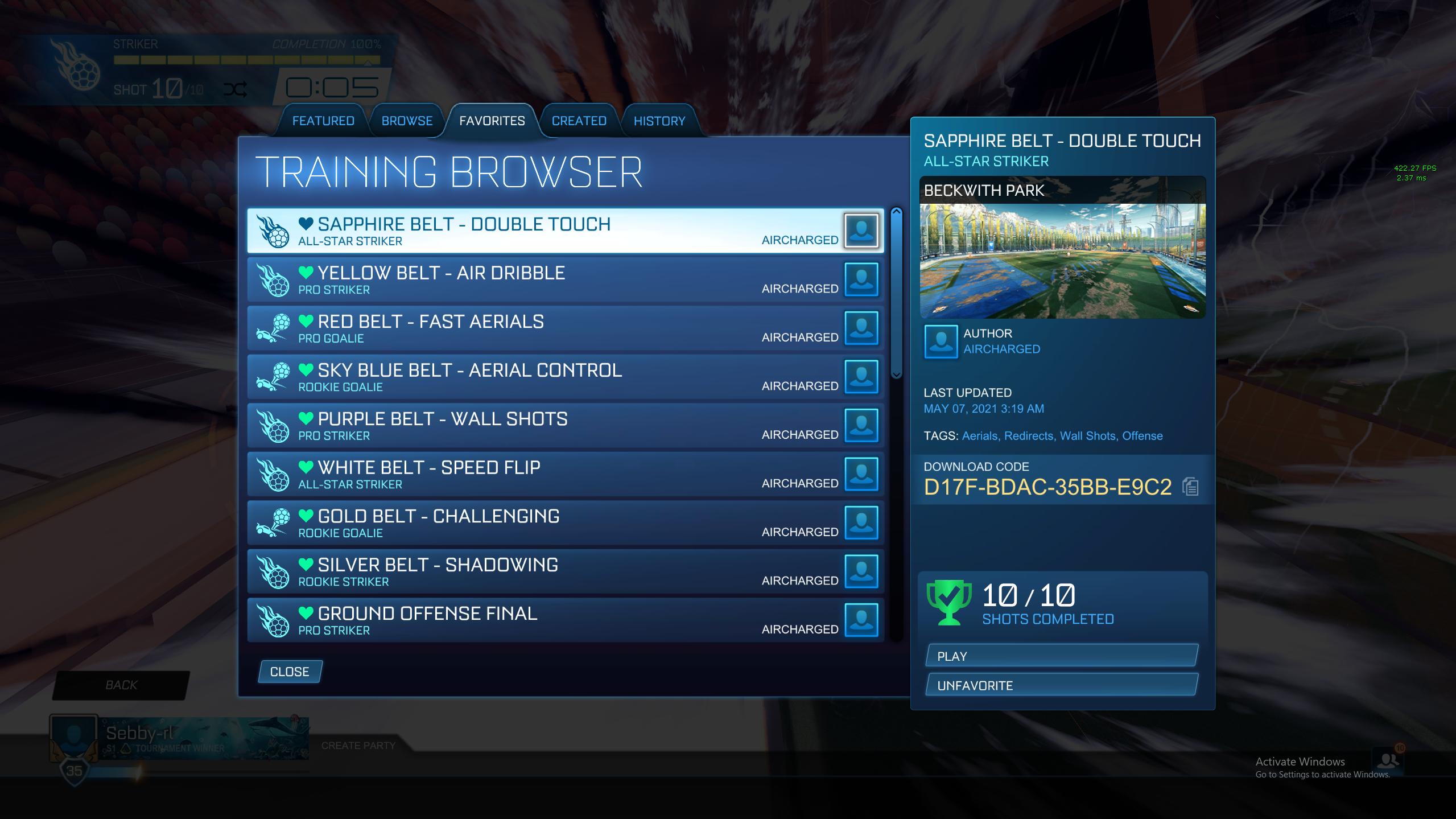
Watch the complete lesson first, then use the training pack to focus on the first-touch angle, backboard read and aerial follow-through.
Do Not Stop At The First Save.
Opportunities disappear when players admire the first shot, lose aerial momentum or wait until the rebound has already developed before deciding to follow it.
More Goals From Defended Shots
Following the backboard return creates a second finish before the goalkeeper can recover from the original save or read.
Faster Offensive Follow-Ups
Planning the rebound removes the pause between the first contact and the decision to continue.
Stronger Aerial Awareness
Tracking the ball, backboard and your own car develops a more complete read of the aerial play.
More Consistent Finishing
A controlled second touch gives you another scoring solution when the initial shot cannot beat the defender directly.
Good attackers do not wait. They arrive again.
Four Mistakes That Remove The Second Touch.
Double touches become unreliable when the first contact is not designed for a follow-up or the player disconnects from the play immediately after hitting the ball.
Hitting The First Touch Too Hard
Excessive speed can send the rebound beyond your available flight path and leave no controlled route to the second contact.
Losing The Car After Contact
The rebound cannot be followed consistently when the first touch leaves you unsure which input will move the car toward it.
Waiting To See The Full Rebound
Delaying the continuation allows the defender to recover and turns the second touch into a desperate late aerial.
Treating The Return As Random
The backboard angle should be read from the first touch rather than approached as a new and unrelated ball.
Build The Finish From The First Contact.
The objective is not merely to touch the ball twice. It is to create a repeatable rebound and remain on the flight path required to convert it.
-
01
Watch The Full Lesson
Understand the backboard read, first-touch angle and follow-through before opening the training pack.
-
02
Create The Rebound
Use the first touch to send the ball into a predictable return rather than hitting the backboard with uncontrolled force.
-
03
Continue Through The Play
Preserve orientation and momentum so your car can move directly toward the expected second contact.
-
04
Complete The Pack In Sequence
Finish every shot from start to finish without resetting, track your progress with the Discord handout and save a screenshot of the completed pack.
Complete The Pack Without A Reset.
Once every shot has been completed from start to finish, take a screenshot of the completed pack and submit it in the Pacifist Discord to earn the Sapphire Belt role.
Once the role is awarded, your completion tick will sync across the Blog Hub and this lesson.
Log in and connect Discord to display genuine Belt completion across every lesson.